Building a Scalable Raw Footage Library for Mercy Ships
For the Mercy Ships, video storytelling is at the heart of communication strategy. It is one of the primary ways donors, volunteers, media partners, and ministry stakeholders understand the mission and connect with the people Mercy Ships serves. Mercy Ships is a globe spanning with many independently operating National Offices spread around the world. As demand for centralized creative assets, patient stories, and localized video content grew, one part of the workflow became increasingly difficult to scale: access to a library of raw footage.
National Offices needed the ability to browse, preview, and select footage for their own donor and volunteer communications. The existing process was highly manual. Requests came in case by case, and raw footage was delivered through tools like WeTransfer, Box, or external drives. These methods worked for occasional transfers, but they were slow, inconsistent, prone to upload or download failures, and required large amounts of local storage from the receiver. More importantly, they did not allow National Offices to see what footage existed before making a request, which limited their ability to plan localized campaigns and tell timely stories.
As the Creative Media Manager, I was tasked to help reduce this frustration by creating a defined solution for video clips and assets. I evaluated the current media workflow, mapped the existing tools, identified gaps, and built the case for acquiring Frame.io as an enterprise raw footage sharing platform for the Global Brand Creative Team.
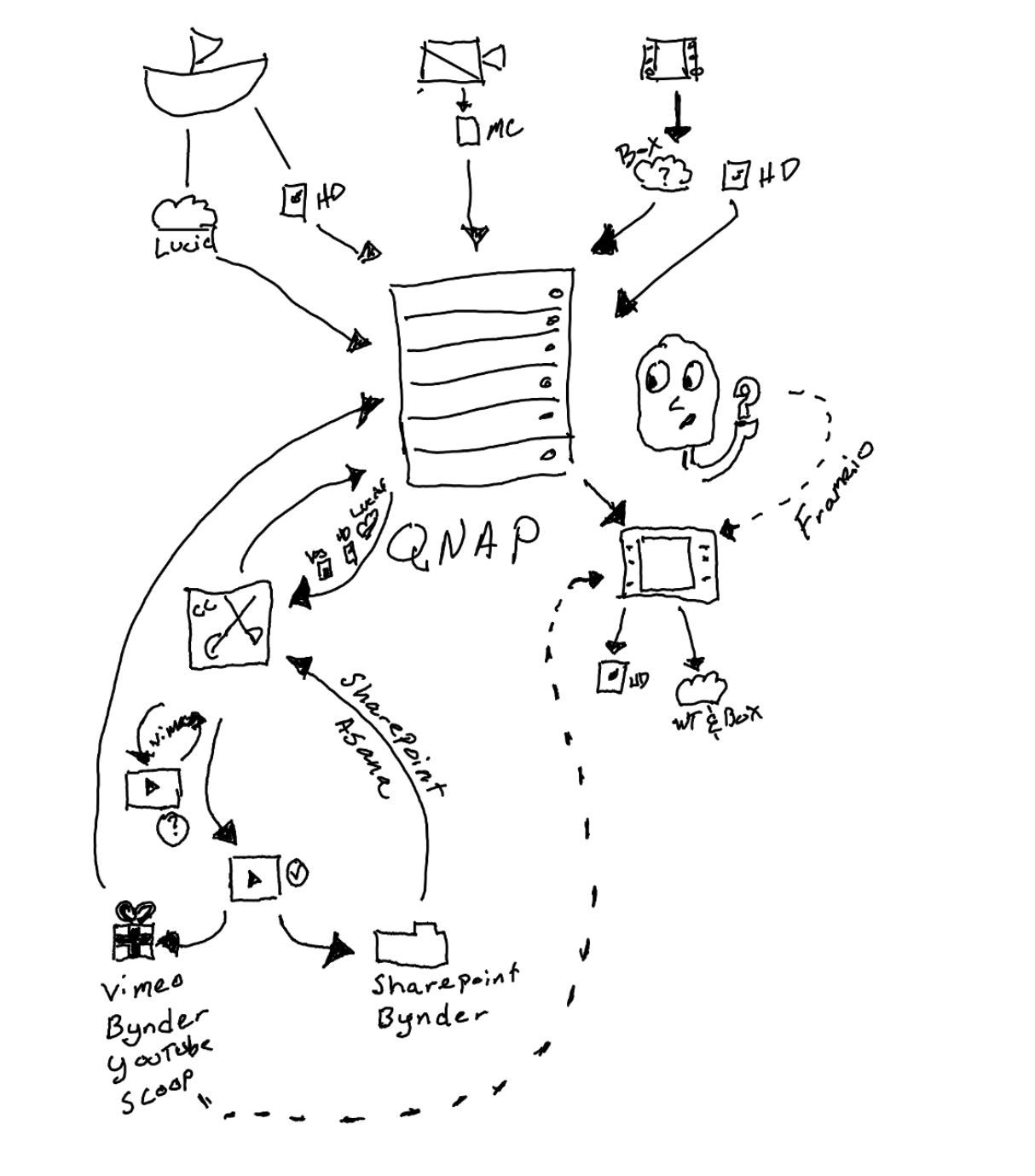
How do you sort out complex systems and processes?
For me, I like to sketch it out, silly as it may look.
The evaluation process included comparing existing tools such as QNAP, SharePoint, Bynder, WeTransfer, Box, LucidLink, Vimeo, Adobe Creative Cloud, and external hard drives. Each tool served a purpose, but none provided the combination Mercy Ships needed: secure browser-based preview, controlled access, large-file media handling, Adobe workflow integration, and the ability for external users to review and download selected footage without creating an ad hoc delivery request every time.
Frame.io emerged as the strongest fit because it could create controlled overlap between several disconnected parts of the workflow. It offered secure cloud-based access, Single Sign-On, watermarking, multi-team workspaces, browser playback, share links, review tools, and direct integration with Adobe Creative Cloud. It also had the potential to reduce dependence on WeTransfer, Box, and Vimeo for specific Global Brand video use cases.
Just as important, the proposal had to address the ethical responsibility of handling patient stories. The solution was not simply to make footage easier to access; it was to make access more structured. The proposed workflow organized footage by story, gave the Global Brand Team control over access, and required National Offices to complete the appropriate raw footage policy and ethical storytelling guidelines before receiving access. This allowed the team to increase creative flexibility while maintaining editorial and consent standards at the core of our brand.
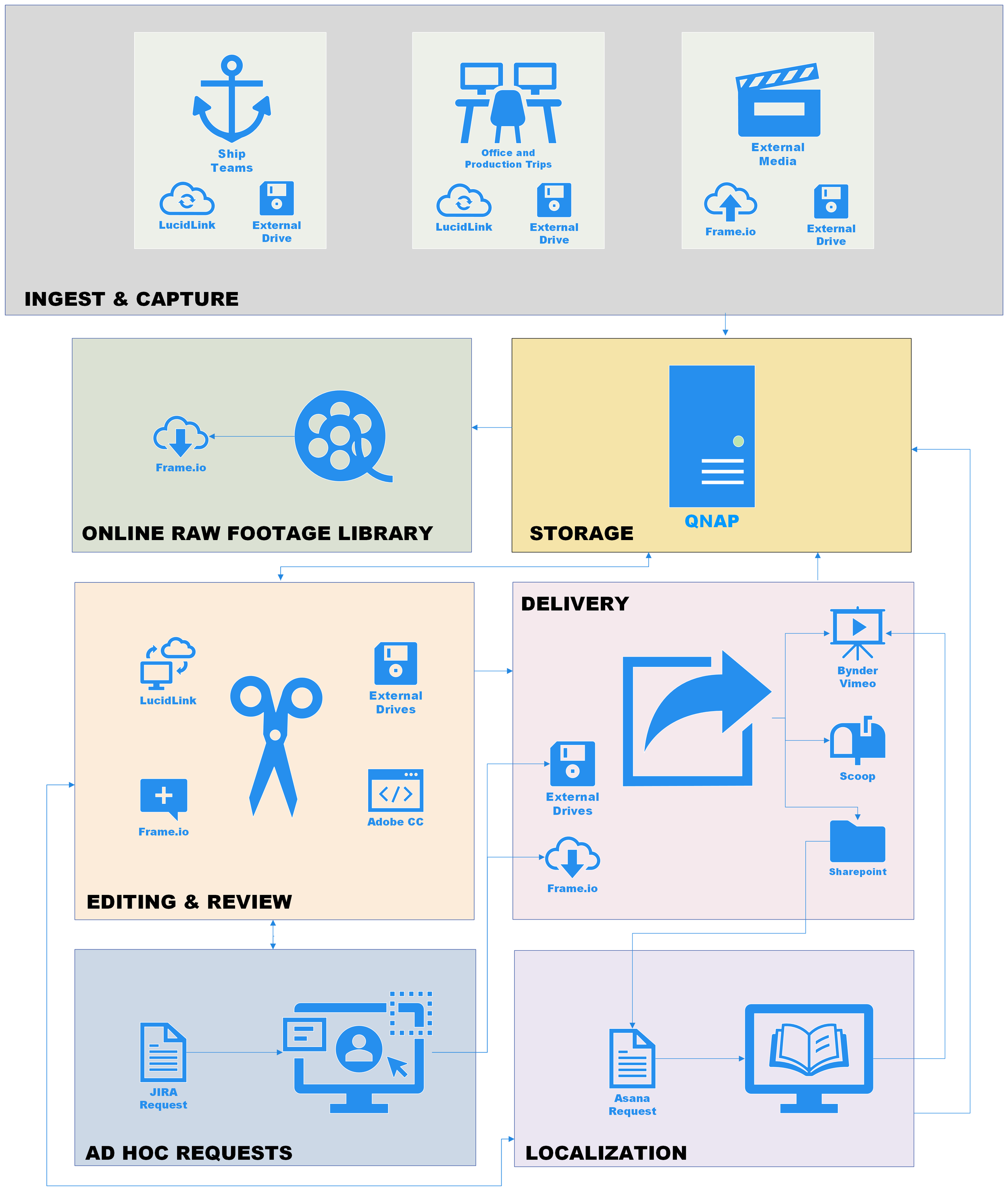
You can always refine the sketch later into something clear.
The final business case included workflow diagrams, tool comparisons, cost analysis, enterprise software evaluation responses, and an Architecture Review Board presentation. The proposed Frame.io enterprise account improve access, speed, security, and scalability while supporting a broader strategic objective: increasing patient story and raw asset output to National Offices.
This project demonstrated my ability to think beyond individual video deliverables and build the systems that make stronger storytelling possible. By connecting creative needs, technical workflows, brand standards, security requirements, and audience impact, the Frame.io proposal gave Mercy Ships a clearer path toward scalable global video collaboration.